A young woman from Murewa shares how safe spaces, enterprise skills and community service supported her journey to a Development Studies degree.
I grew up in a rural community in Murewa, where education was highly valued in my family. I am the eldest of five children, and from a young age I felt a deep responsibility to lead by example for my younger siblings. My father taught at the same high school I attended, and watching his commitment to education inspired me to dream beyond what was visible around me. I promised myself that no matter the obstacles, I would go to university.
Through Nhanga, I found confidence, purpose, and a sense of belonging.
In 2019, after completing my Advanced Level studies, I returned home to Murewa to wait for my results, as most students do. When the results were released and I had passed, I was filled with excitement and hope. However, that joy was quickly replaced by uncertainty. My parents were not financially stable enough to pay for my university fees. I remember them trying to sell livestock so that I could continue my education, but the country was experiencing severe economic challenges, and hyperinflation made it almost impossible. With each passing day, my dream of going to university felt further away.
During this difficult period, a friend introduced me to Rozaria Memorial Trust (RMT). Joining RMT marked a turning point in my life. I began attending Nhanga every Friday which is a safe, intergenerational space where girls and women come together to learn, lead, and speak openly about issues affecting our lives. Through Nhanga, I found confidence, purpose, and a sense of belonging. I later had the honour of serving as the first Community Nhanga President, a role that allowed me to advocate for the rights of girls in rural communities at both district and national levels.
Through RMT, I also became part of an economic empowerment project that equipped young women with practical skills to become financially independent. I completed a three-day entrepreneurial training at the RMT Education and Counselling Centre, where I learned detergent making, bag weaving, and financial literacy. When the COVID-19 pandemic began, I used these skills to start a small business selling liquid soap, with one clear goal to raise money for my university tuition.
In February 2020, I applied to university and was thrilled to secure a place at Bindura University of Science Education, where I pursued a degree in Development Studies. Around the same time, I joined the RMT team as a receptionist and library assistant. This role allowed me to continue working closely with girls and young women from deep rural communities by facilitating community-based and school-based Nhangas. Being part of RMT was not just about employment; it was about giving back and supporting other girls who were facing challenges similar to those I had experienced.
Through my work with RMT, I also had the opportunity to attend the ConnectHER Film Fellowship Filmmaking 101, led by Tinaye Wakatama. The fellowship equipped me with practical storytelling and filming skills that strengthened my ability to document community initiatives and amplify local voices. Using these skills, I contributed to filming media coverage of RMT’s MTC Soccer Tournament, an October 2024 project that brought together young people, community members, and leaders to promote positive engagement and social change.
Alongside this, I worked with traditional and community leaders, supporting young women’s advocacy and dialogue aimed at ending harmful cultural and religious practices in rural communities. These experiences deepened my understanding of community-led development and reinforced my commitment to creating safe, inclusive spaces for girls and women.
In October 2024, I graduated with a Bachelor’s Degree in Development Studies. This achievement is a reminder that with the right support, safe spaces, and opportunities, girls from rural communities can shape their own futures.
Today, as a young development practitioner, I am committed to empowering girls and women in rural communities and advancing gender equality. My journey has taught me that background does not define destiny.
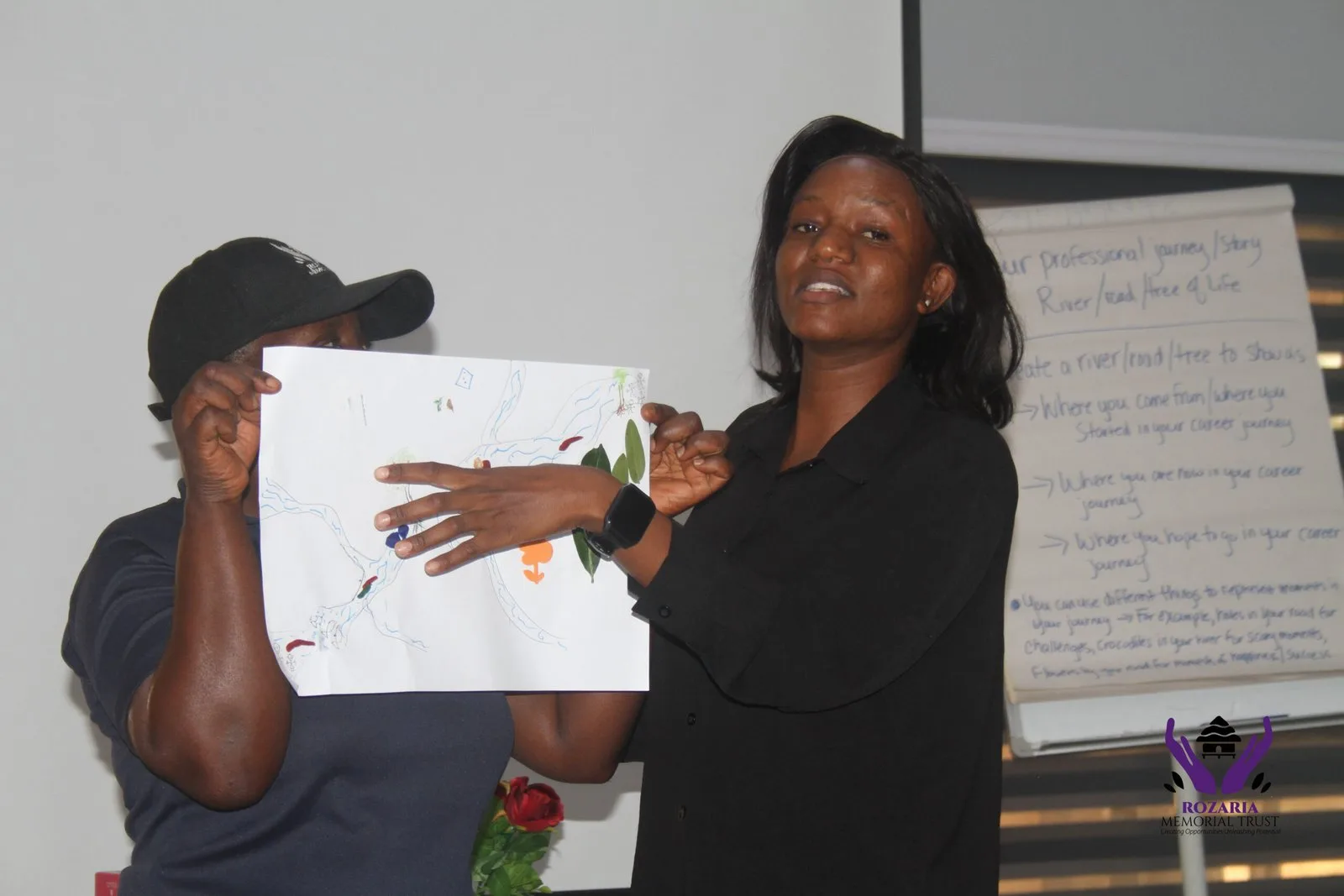
Adapted from the success stories supplied by RMT. The source does not name the narrator or specify a publication date. Photographs illustrate RMT’s wider work and do not identify the narrator.